
Cupboard & Wardrobe Repairs
Repair loose hinges, drawer runners and wardrobe tracks. Panel condition and compatible hardware determine whether a local repair is suitable.
Cabinet repair options →Ellis Perth local repair team
Clear your home repair to-do list with Ellis's local Perth handyman team. We repair household fittings, assemble furniture and complete small maintenance jobs, with an on-site assessment and written quote.
Contact Us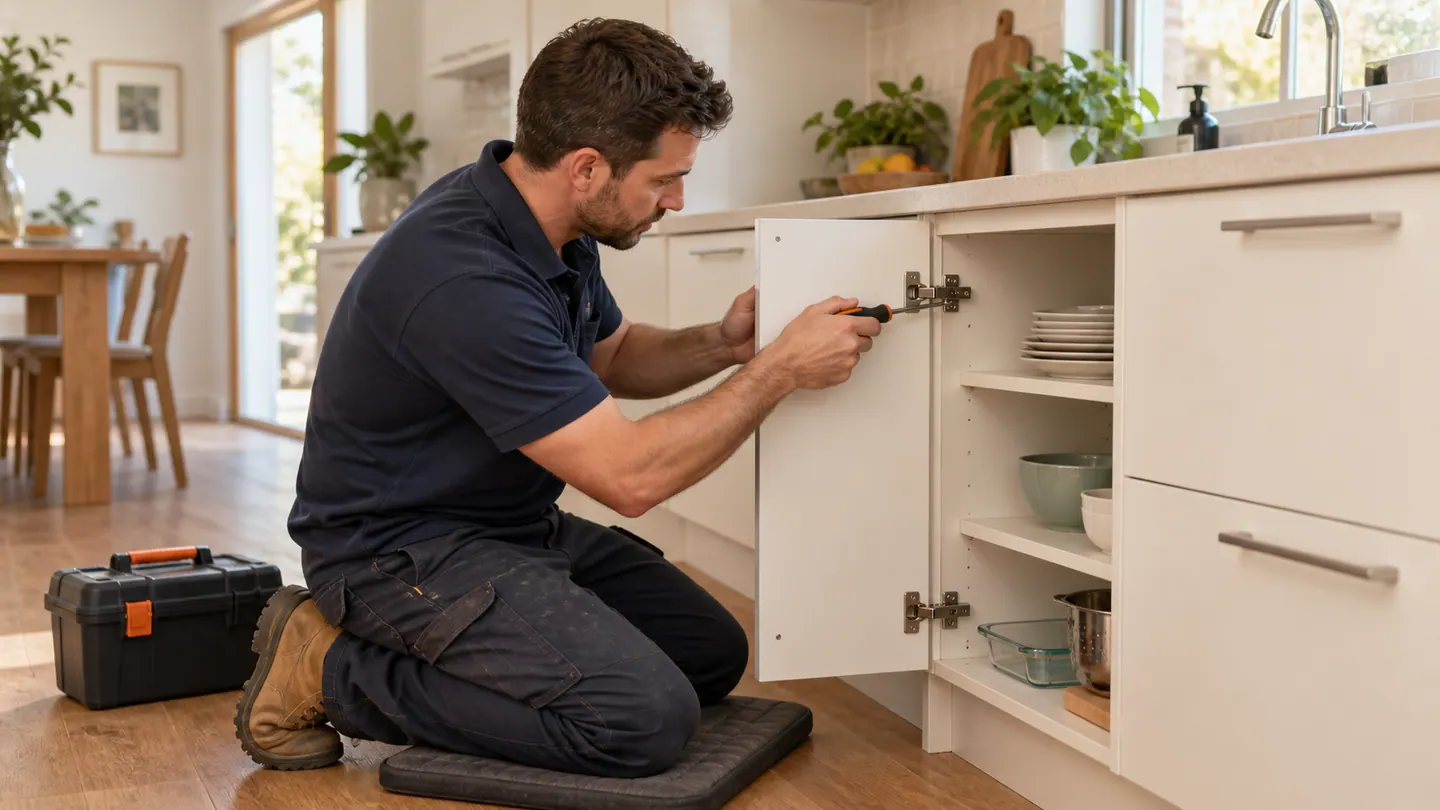
Choose the work you need below. You can combine compatible jobs in one request; our team checks the property and confirms the repair plan with you.
Repair loose hinges, drawer runners and wardrobe tracks. Panel condition and compatible hardware determine whether a local repair is suitable.
Cabinet repair options →Fit shelves, mirrors and pictures to suitable wall support. Share the product and intended load; TV brackets and electrical alterations need separate checks.
Wall fixing options →Repair sticking doors, hinges and latches. Glass sliders, fire-rated and security doors need their own handling and product checks.
Door repair options →Restring lines, repair brackets or fit a supplied unit. An unstable frame needs support repairs; extra tension alone will not fix it.
Clothesline repair options →Repair letterbox posts and fit hose reels. Check support, buried services and permissions before digging or adding loads to a wall.
Outdoor fixing checks →Fit dog doors and cat flaps in suitable panels. Timber, mesh, glass and security screens need different product and fitting checks.
Pet door suitability →Repair suitable boards, planks and doorway trims. Matching material, flooring system and moisture condition determine the extent of a local repair.
Floor repair checks →Clean suitable accessible patios and paving with a method matched to the finish, joints and drainage. Roof and asbestos cleaning are excluded.
Cleaning safety checks →Fit a suitable rail at an assessed position with structural support. Placement advice, funding approval and installation are separate decisions.
Rail and support checks →Repair suitable linings and timber trim. Sagging supports, recurring leaks and unidentified older eaves material need investigation before local repairs.
Eaves and support checks →Letterbox installation and local repairs include checking the post, base, ground support and clearance. A knocked-over letterbox or hose reel pulling away from brickwork needs the whole support assessed. Share the product and visible damage; parts, supply, removal and disposal are agreed separately.
A proposed letterbox post position needs checks for underground services, boundaries, nearby access and the installation requirements. Do not assume an empty-looking patch of ground is clear. We agree the location and necessary checks before digging.
Weather exposure, corrosion, movement and deteriorating wall material can loosen outdoor fixings. A replacement screw cannot restore damaged support by itself. The fitting, fixing points and surrounding material need checking together before further loading.
Exposure, corrosion, movement or damaged wall material can weaken the fixing. We check the product and supporting surface together. Retightening a failed fixing may not address the cause.
Share the pet size and product model. A timber door needs its thickness, framing and cut-out checked; ordinary mesh needs a frame that can support the product. Glazing work and security-screen alterations have separate requirements. A pet flap must not be assumed to preserve security performance.
Do not drill or cut an existing toughened-glass pane. We assess the glass and pet-door product and confirm whether a purpose-made replacement pane is needed before installation.
A pet-door opening can affect a security door’s complete product system and performance. Product approval, installation requirements and relevant qualified-work requirements need checking before alteration. Ordinary mesh-screen work does not establish that a security door can be modified.
Minor laminate and vinyl repairs can address suitable damaged boards, planks and doorway transition strips. Click-lock and glued floors need different access; matching material and surrounding flooring affect a local replacement. A lifting bedroom doorway trim can be a trip hazard, while a swollen board near a laundry needs the moisture source investigated before reinstatement.
Moisture, restricted movement, damaged joints or an uneven substrate can lift laminate edges. The visible edge does not identify the cause by itself. The floor system and affected area need assessment before a board or trim is replaced.
Continuing moisture should be investigated before replacement floorboards are installed. The source, substrate condition and suitability for reinstatement matter. Replacing a swollen board without resolving dampness can expose the new material to the same damage.
Moisture, movement restriction, joint damage or an uneven backing can contribute. We check the system and fault history before choosing a local repair. A new trim or heavier fixing will not necessarily resolve the underlying problem.
Yes. We assess the moisture source and substrate condition before reinstatement is agreed. Drying, other trade work or backing repairs may be needed. Replacing the visible board alone does not establish that the cause is resolved.
Accessible patio and paving cleaning needs a method suited to the surface, joints and coating. Slippery courtyard paving or driveway stains before an inspection need the stain and runoff considered. We assess the stains and surface condition, then discuss a suitable cleaning method, including gentler options for fragile finishes.
Note flaking coatings, loose pavers, nearby doors and runoff paths. Confirm water availability, access and protection or cleanup requirements. Loose or sunken paving needs its own repair assessment.
Unsuitable pressure can dislodge weak jointing, damage coatings or erode vulnerable surfaces. The condition and material determine the method. Cleaning needs protection and drainage planned; it cannot correct loose pavers, a failed base or recurring pooling.
Suspected asbestos-containing material must not be pressure cleaned. Keep unidentified sheets and finishes undisturbed. We check the patio and paving materials before choosing a cleaning method; roof and asbestos cleaning are not included in this service.
Yes. Weak jointing and vulnerable finishes can be damaged by an unsuitable method. We assess the surface, coatings, joints and drainage first. Paving repairs may need a separate scope before cleaning is suitable.
Bring any placement plan from your adviser and identify tiled areas or concealed services. The quote identifies supply responsibility, the rail, fixings and any support or finish work. Installation alone is not an accessibility assessment or guarantee.
We repair worn or damaged fittings and assess home modifications against your installation needs. If funding is involved, confirm the approval and payment arrangements before booking so we can agree the work and quote with you.
A grab rail’s position must suit its intended user and the appropriate placement plan, while its fixings need suitable structural support. Tiles or plasterboard alone do not establish support. We check product, location and wall conditions before agreeing installation.
A bathroom towel rail is not a substitute for an assessed support rail. Its product and fixings are not established for a person’s balance or transfer load. A suitable grab rail needs its own placement, product and structural support assessment.
A sagging beam, moving post, deteriorated connection or altered roof load can require structural advice. Cosmetic trim repairs do not resolve support failure. We identify the appropriate qualified assessment before disturbing or loading affected components.
Leave unidentified eaves sheets undisturbed. Tell us where the damage is; we arrange material assessment and confirm the repair plan before cutting, drilling or removing lining.
A handyman visit can address defined minor repairs and installations around the home. The task, material and condition control the scope; an electrical, plumbing, structural or safety-critical fault needs the appropriate Ellis team.
Fixed wiring, water-service work, gas faults and structural concerns cannot be accepted merely as odd jobs. We scope these separately with our own appropriately licensed personnel; naming the symptom helps identify the right assessment.
Group cupboard faults, furniture assembly and other small jobs, including repairs for a family member. Keep each task clear so the scope can be agreed. Prepare a repair list →
Identify the affected lot or common area and the authorised approval contact. Access, spending limits and variations need agreement before the work proceeds. Check strata authority and access →
Separate the authorised repair list from cleaning and agree access, variations and completion records. Plan the repair handover →
Discuss repairs before photography, an open home or a workplace visit. Share the deadline and access restrictions; we confirm the appointment directly. Discuss the maintenance scope →
For strata maintenance, identify the exact lot or common-property location and the person authorised to approve assessment and repairs. An occupant's request to attend does not establish approval for work on common property. Bring the approved task list, spending limit if applicable and the contact for any variation.
We agree tenant or occupant appointments, keys, parking and shared-area access before attendance. Flag noisy work and any building access rules. Repair findings and extra work go back to the nominated approval contact before proceeding. Use our property maintenance service for the wider repair list and managed-property coordination guide to prepare the authority and access details.
Vacate repairs address the authorised repair list: for example loose cupboard hardware, damaged wall patches or sticking doors. Bring the property manager's marked list if available and distinguish damage to repair from cleaning tasks. End-of-lease cleaning has its own agreed checklist and quote.
Confirm the approval contact, key collection, access window and planned handover date. We scope the repairs, materials and desired finish, seek approval for variations and agree how completion details will be handed over. Existing photos are optional; do not remove fittings to prepare them. See wall patching and finish choices where a vacate list includes plaster damage.
For each repair, note the room, faulty item, symptom, quantity and preferred outcome. Add your suburb, priorities, access limits, approvals and any supplied products. Photos and measurements are optional; we can assess the details on site.
Service pricing
Ellis Services Group service price range
A$52-145Labour per hour
A$210-590Half-day booking
A$400-945Full-day booking
We provide a written quote after an on-site assessment of the property, materials, access and agreed scope of work. Contact our team to arrange your assessment.
We set out the pricing basis, fees and included work in your written quote so you can see the scope of the job.
We set out the tasks, labour basis, materials, supply arrangements, access, removal, disposal and exclusions in your written quote. We also explain how changes are approved. Published service ranges remain a guide; your property quote follows the assessment.
Tell us the repairs you need. We confirm the personnel, relevant qualifications and written scope for each task before work begins, including any separate electrical or security work.
Smoke, sparks, gas odour, rapidly spreading water, collapse risk or a person in immediate danger should not wait for a routine handyman appointment. Keep clear of the hazard and use the appropriate emergency response; do not dismantle equipment to investigate.
An urgent handyman request does not replace an emergency electrician, plumber, gas specialist or emergency services. The hazard determines the response. Ellis’s regulated work uses its own appropriately licensed personnel, with availability and the accepted appointment confirmed directly.
Yes. Tell us your suburb and the jobs you want completed. We assess them together and agree the repair list, materials and quote. Grouping compatible tasks lets you organise cupboard repairs, assembly and other small jobs through one contact.
We provide a written quote after an on-site assessment. We explain whether the work is priced by time or a booking block and identify the labour, materials and disposal included. Additional repairs need their scope and price agreed before proceeding.
Yes. Share the product details and tell us what is already on site. We check compatibility, missing hardware and installation requirements before confirming the work. Product supply and any extra materials are identified in the quote.
Yes. Confirm the person authorised to approve repairs and arrange entry. Tell us about tenant appointments, common-property approval, parking and trading hours so we can agree access before the visit.
No. Describe the problem by phone or through Contact Us and provide your suburb. Photos, measurements and a repair list are optional. Our Perth team checks the property on site and helps define the work.
We identify electrical, plumbing, gas, structural and other specialist requirements during assessment. Our own appropriately licensed personnel complete regulated work within the agreed scope. Fixed wiring, wet-area waterproofing and structural changes are separate from ordinary small repairs.
Tell us what needs fixing and your suburb or postcode. We arrange an on-site assessment and confirm the work and written quote directly with you.
Contact us about your repairsWe check the proposed position, boundaries, access, ground conditions, underground services and supplied product's support requirements before digging. Tell us about known service locations and whether an old post must be removed. The assessment and quote identify the agreed installation work rather than relying on appearance.
Yes. Provide the reel model and proposed position. We check the masonry, fixing points, clearance and supplied brackets before fitting. Crumbling brickwork or damaged mortar needs assessment rather than simply using a larger screw.
We can assess local pergola repairs, separating trim and lining work from damaged supports or structural movement. Describe loose timber, sagging components or recurring water damage. The assessment establishes the material and suitable work before any repair is approved.
Yes. Tell us the building age and visible damage without disturbing the sheets. The material needs identification before drilling, sanding or removal, because older linings may contain asbestos. We confirm the safe assessment and work required rather than assume a simple patch.
We can assess cleaning for a small patio, choosing a method suited to the paving, joints, coatings and drainage. Describe the surface and stains. Fragile materials or suspected hazardous materials require assessment before pressure cleaning is considered.
Discuss both tasks with Ellis and identify the paving, garden waste and small repairs involved. We confirm what can be grouped and which work needs a separate service. Waste removal and any disposal charges should be included explicitly in the quote.
Yes, where the flooring system and available replacement material allow a local repair. Click-lock boards and glued flooring need different access and preparation. We check how much surrounding flooring must be lifted and whether spare matching material is available before quoting.